Your partners already know the people you need to meet
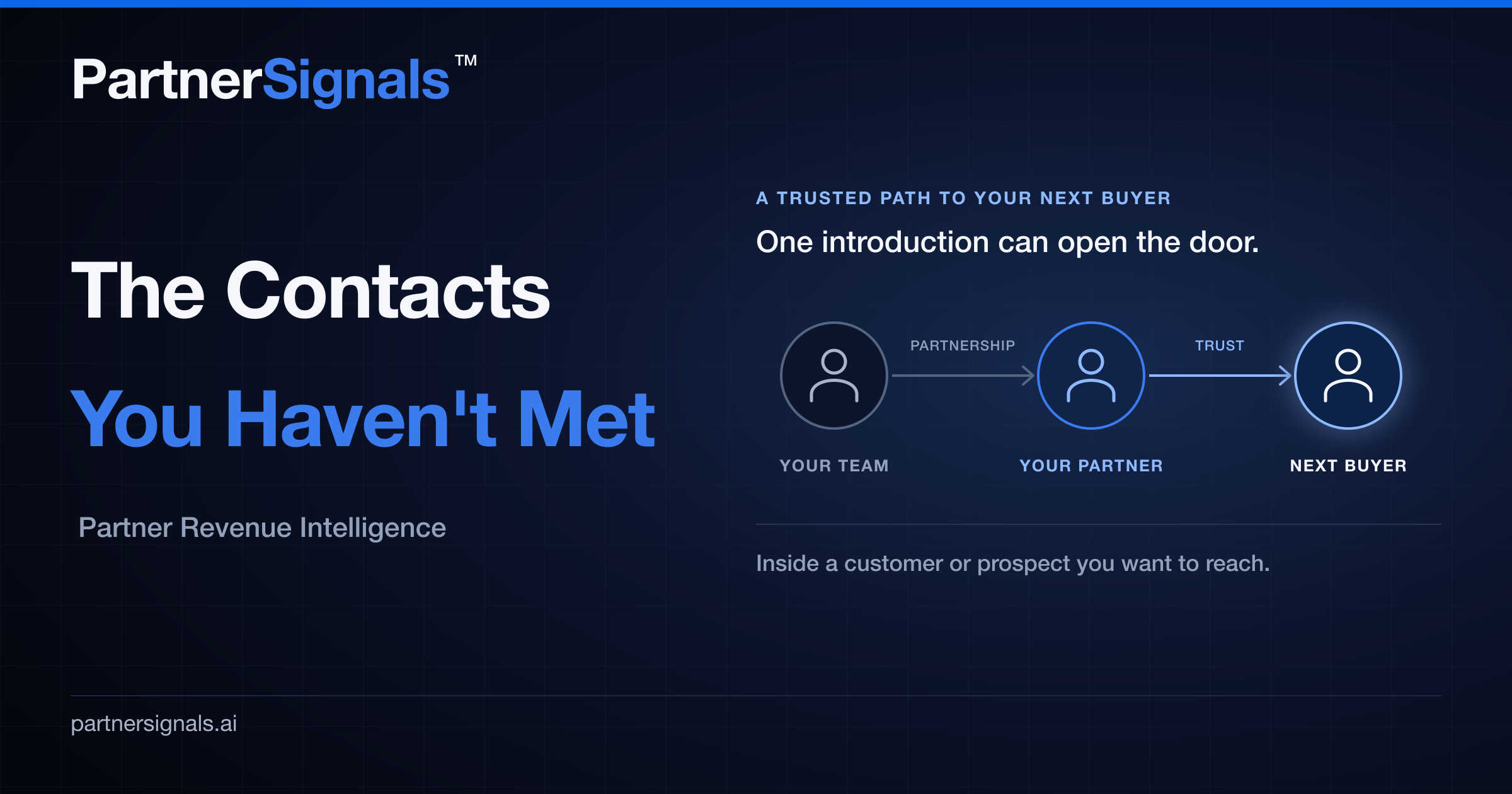
Your next opportunity may start with someone your partner already knows.
You know the account. Your partner may know the person who can open the next opportunity.
That could be a buyer in another department at an existing customer. It could be a decision-maker at a prospect your team has struggled to reach. In either case, the useful connection is between people: someone with a problem worth solving and someone whose advice they already trust.
Your CRM is a good record of the customers, prospects, and contacts your team knows. As your team learns more, those relationships belong there too. The next growth opportunity may start with a person who hasn't yet become part of that record.
The next buyer may be inside a customer you already have
Picture a customer using one of your products in one department. Another team has a related problem, but your account executive has never met the person responsible for it.
You have a foothold in the company. You know your product can deliver value in the right situation. You still need to understand whether that other team has a relevant need, who owns it, and whether there is a reason to act now.
An implementation partner may already work with both departments. Their consultant may know the person leading the second team and understand what is getting in the way.
That is expansion white space you can begin to work: a possible use case, a relevant person, and a relationship that could support a conversation.
An introduction lets you test the opportunity. The buyer still needs a reason to meet, and your team still needs to earn the business.
The same relationship can open a new account
Your partner may also work with companies that resemble your best customers. Similar needs, similar technology, similar operating problems.
That resemblance gives you a place to start. The partner can help you understand whether the fit is real. Who owns the problem? Is it a current priority? What has the customer already tried? Would a conversation with your team be useful?
The answers can change your priorities. A company that looks ideal on paper may have no reason to engage. A less obvious prospect may have a specific problem you can help solve and a buyer willing to discuss it.
The partner's knowledge helps turn a target account into a reason for two people to talk.
Make the introduction specific
“Who can you introduce us to?” leaves your partner with most of the work.
A better request starts with a customer need: “We think this team may be dealing with this problem. Do you know the person responsible, and would a conversation be useful to them?”
Give your partner enough context to judge the fit. Explain the problem you help solve, who usually owns it, and what a useful first conversation would cover. Ask whether their relationship is current and whether they are comfortable making the introduction.
When they are, agree on the next step together. A short introduction with a clear reason to meet gives the buyer something concrete to respond to. Keep the existing account team involved so the outreach fits the broader customer relationship.
Work the relationship, then record what you learn
For each opportunity, capture the account, the relevant contact, the customer need, and the person at your partner who knows them. Add the agreed next step and its owner to the CRM.
That gives the team a basis for follow-up. An account overlap alone cannot tell you whether an introduction is welcome or a problem is worth pursuing. A named contact and an agreed conversation can.
Start with one partner you trust and a few customers or prospects where you see a plausible fit. Ask whom they know, what those people are trying to solve, and where they would feel comfortable helping you connect.
You may get a shorter list than you hoped for. But each name will come with a reason to talk.
Work that list.
Get new posts by email: Subscribe on Substack →