Partners decide which deals you compete for
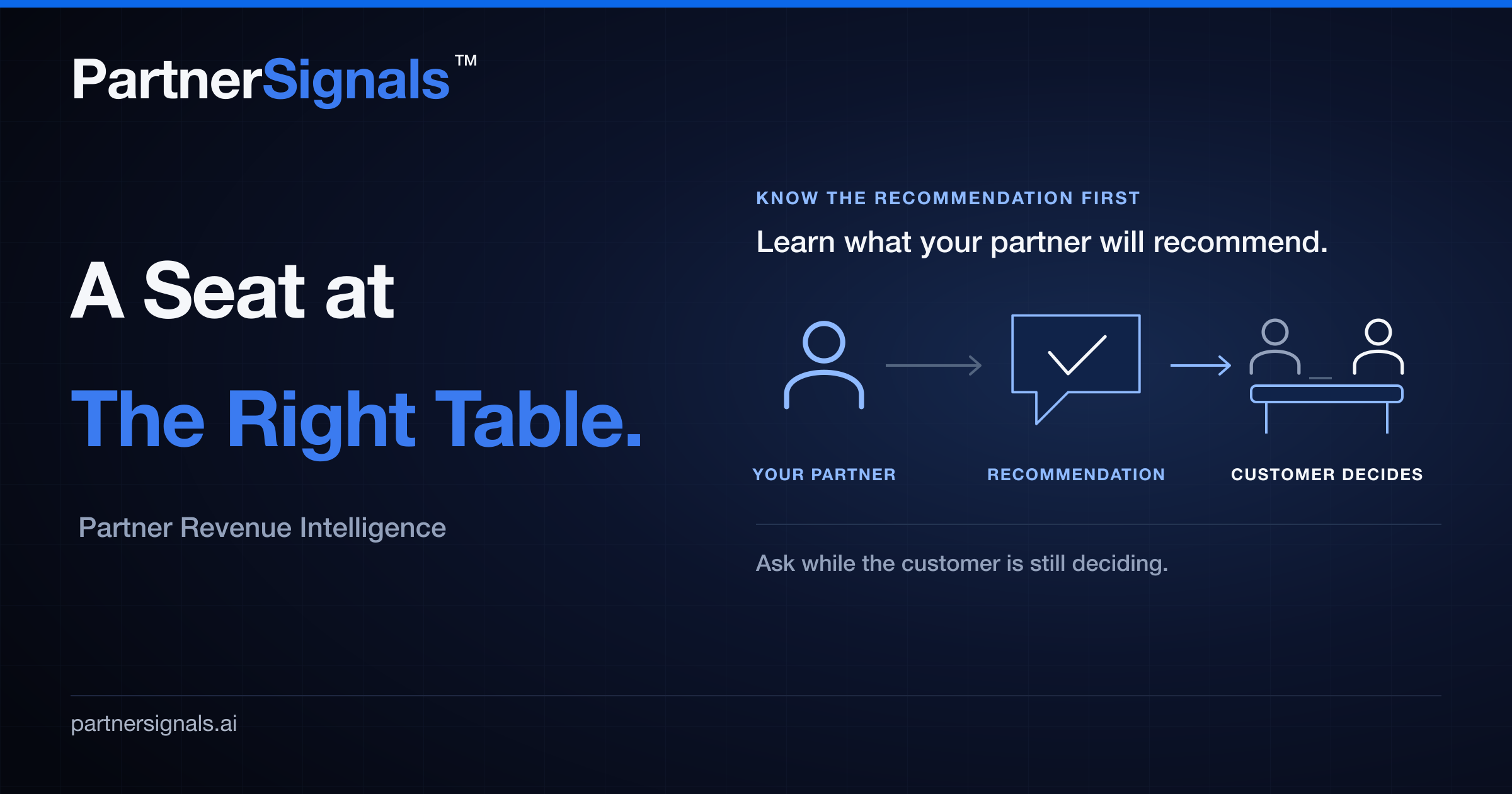
Your best chance to earn a place in a deal starts while the customer is still deciding what to buy.
We lost a $2.2M healthcare deal that looked strong right up to the end.
Our executive engagement was solid. We had a validated use case and a successful proof of concept. The sales team had committed to closing that quarter, and I agreed with them. Everything we could see supported the decision.
What we couldn't see was the work happening around us.
The incumbent solution provider and a global systems integrator had spent months shaping the architecture, the requirements and the buying criteria. They had decided another vendor was easier to recommend and easier to implement.
By the time the customer told us, we were competing inside a decision those partners had already helped shape.
That loss stayed with me. It is part of why I built PartnerSignals.
The recommendation comes before the pitch
Partners help vendors close business. They also help customers decide which vendors get a meaningful chance to compete.
When a buyer uses AI to research a problem, compare approaches and build a shortlist, the next conversation may be with a trusted adviser: “Which of these would you put into our environment?”
That question carries work a product comparison cannot finish. Someone has to understand the dependencies, the implementation team, the existing architecture and the customer's appetite for change. A partner who works there can bring that context.
Their recommendation can shape the requirements your sales team eventually receives. It can also surface a concern your team could resolve, if you hear it while the customer is still weighing the options.
That is a growth opportunity worth working early.
Find out what the partner would recommend
In the healthcare deal, our team asked the questions we knew to ask. Looking back, we should have tested the decision more thoroughly. But some of the answers lived in conversations we weren't part of.
Being on your partner roster does not mean someone will recommend your product in every account. They are responsible for helping their customer make a choice they can deliver. Their confidence may depend on implementation experience, available expertise or a technical concern your team hasn't heard.
You need to know where that person stands before the requirements harden around another approach.
Ask what would make your offering easier to recommend. A joint technical session might address an integration concern. Access to the right specialist might help the partner assess a deployment question. You may also learn that your product is a poor fit for this particular need.
Any of those answers gives your team a better next step than assuming the partner is behind you.
The timing matters. Ask before the customer finishes comparing approaches, while the partner can still test an assumption with you. Once the buying criteria are fixed, even a useful answer may arrive too late to change them.
Ask these questions while the deal is open
Choose an active opportunity where the customer is still evaluating the approach. Ask:
- Which partner is influencing the customer?
- What outcome is that partner advocating for?
- What evidence supports it?
- What's changed in the last thirty days?
- Is that partner fully behind your offering?
Name the person at the partner, as well as the company. Identify whom they advise and what part of the decision they help shape. “We have a good relationship with that firm” leaves too much unanswered.
Then ask your sales leader, your channel or alliance leader, and the account executive those same questions separately. Compare their answers before the next account review.
You may hear three different stories about the same deal:
“This is a direct opportunity we're fulfilling through the channel.”
“The partner is driving this deal.”
“The partner is transactional, and a systems integrator is doing the deployment.”
Each person may be describing something real. The problem is that the team has no shared account of who is shaping the buyer's choice. Resolve that difference with the partner and the customer while their answers can still change your approach.
Bring the missing conversation into the account plan
Your CRM is the right place for the team to work from a shared record. Add the partner contact, their role in the decision, what they have said and when they said it. Distinguish a confirmed recommendation from your team's assumption.
Then record the next conversation that needs to happen. Give it a purpose: understand the partner's concern, test an implementation assumption or hear how the customer is comparing the options. Agree who will arrange it and what the team needs to learn.
Bring the partner into that plan with a useful offer of help. They need confidence that the solution will work for their customer. Your team needs a chance to address what stands in the way.
An open opportunity is still a chance to learn, adapt and earn the business. The later you discover who has been advising the buyer, the fewer choices you have left.
Before your next pitch, find out who the customer has already asked for advice. Then learn what they said.
Get new posts by email: Subscribe on Substack →