The Partner Revenue Your CRM Calls Direct
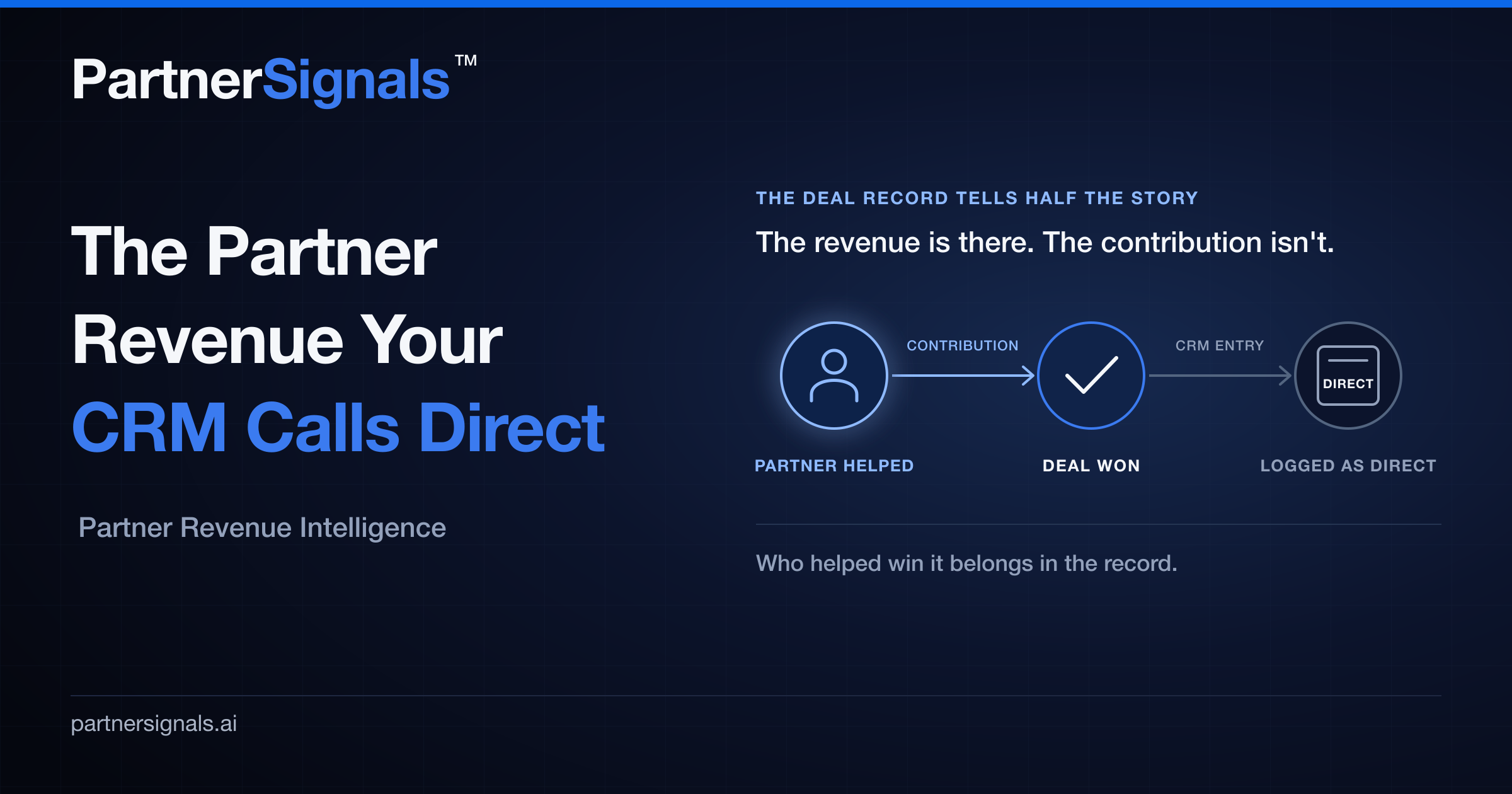
The deal is in your numbers. The relationship that helped win it may be missing.
Your CRM can tell you who owns a deal without telling you who helped win it.
A partner may have opened the door to the decision-maker, resolved a technical objection, or given the buyer confidence to move forward. Your rep closes the deal. The opportunity stays marked “direct.”
The source field can be correct. Your team found the opportunity. But when you plan the next quarter, that field alone won't tell you which partner relationships could help the next deal move.
The useful question is what the partner helped change, and whether that contribution points to something you can do again.
Look beyond where the opportunity started
Partner contribution takes three familiar forms. Each answers a different question.
Partner-sourced: Who brought us the opportunity? The partner made the referral or registered the deal. There is a clear starting point. That makes sourcing easier to see and report, but it only describes how the opportunity began.
Co-sell: Who worked the opportunity with us? Your team and the partner pursued the deal together. They helped reach the buying group, shape the solution, or navigate the decision. Shared meetings, account plans, and technical work can show what that collaboration involved.
Partner-influenced: What did the partner help change? A trusted adviser helped the buyer resolve a concern. A consultant introduced an executive your team couldn't reach. An implementation specialist showed how the solution would work in the customer's environment.
Those contributions can matter even when the partner neither sourced the opportunity nor joined a formal co-sell effort.
The roles can overlap. A partner may introduce an opportunity and help close it. Record the contributions that occurred and count the revenue once.
A useful record connects an action to progress
Consider a deal held up by an implementation concern. The buyer likes the product but is unsure whether the team can deploy it alongside existing systems.
A partner who has worked in that environment joins a technical session. They explain the dependencies, answer the buyer's questions, and help the teams agree on a workable approach. The buyer then proceeds to the next stage.
“Partner attended meeting” leaves out the useful part. The record should identify the concern, the person who helped address it, and what the buyer agreed to afterward.
An account overlap, a meeting invitation, or a partner name attached to an opportunity doesn't establish that connection on its own. Look for the introduction, meeting notes, technical work, or buyer confirmation that explains what changed. If the evidence is incomplete, say so.
That gives your team something it can examine before asking the same partner to help elsewhere.
Participation is a starting point for investigation
On Okta's Q4 FY2026 earnings call, CFO Brett Tighe said channel partners were engaged in 18 of the company's top 20 deals that quarter. That is a statement about participation; it does not mean partners sourced all those opportunities or establish how much revenue was incremental. Okta Q4 FY2026 earnings transcript, March 4, 2026.
For your own business, the next question is what that participation involved. Which relationships helped your team reach a buyer? Which expertise helped resolve a concern? Which actions would be useful in the opportunities you are working now?
You don't have to prove that influence is your largest category to start answering those questions.
Start with ten wins, then use what you learn
Pull ten recent closed-won deals, including opportunities recorded as direct. For each, ask the account executive: Did a partner contribute? What did they do? What changed afterward? What evidence supports that account?
Capture the person and the action as well as the partner's name. A particular consultant's relationship with a buyer may be the useful connection. A specific delivery team's expertise may explain why the buyer gained confidence.
Review the findings with sales, partnerships, and finance. Agree on what qualifies as influence, keep sourcing and co-sell participation distinguishable, and make any overlap visible. A review of selected wins can reveal actions worth investigating; it cannot tell you the effect of partner involvement across your entire pipeline.
Then bring the learning into live account planning. If a partner helped resolve an implementation concern, find the open opportunities where a similar concern is holding up progress. If an introduction mattered, ask where that same relationship could support another relevant conversation.
Confirm that the partner has the relationship, expertise, and willingness to help. Agree on a specific next step and record the outcome as the opportunity develops.
The value of this work is in the next decision it improves. You learn which partners can help with which customer needs, and when to bring them into the conversation.
Before asking what partners could bring you next quarter, find out what they helped you win last quarter. Then put that knowledge to work.
Get new posts by email: Subscribe on Substack →