A partner goes quiet on an active deal. How many days before your team notices?
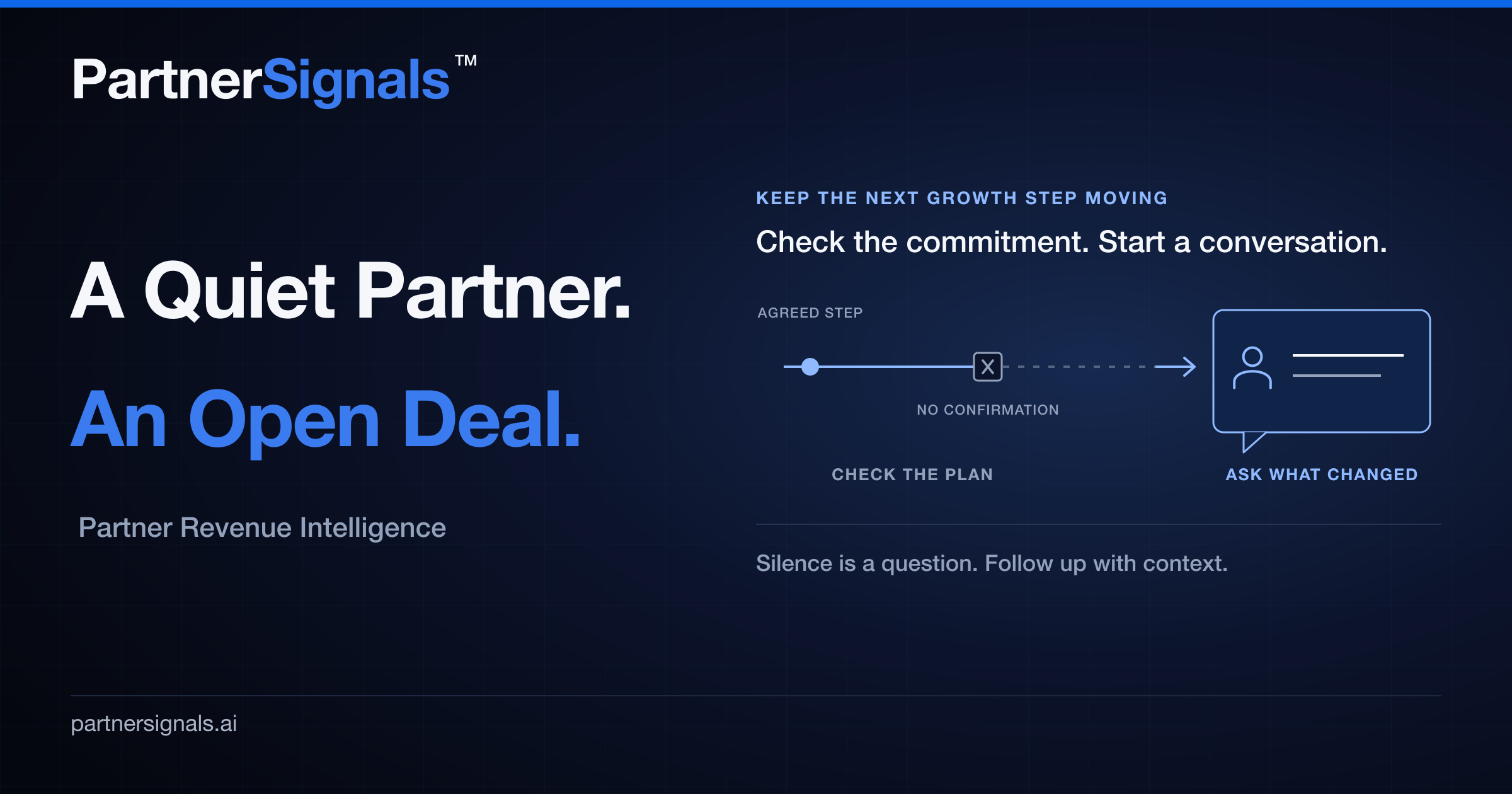
Keeping a partner involved can keep an opportunity moving. Start by understanding the step that went missing.
The next customer workshop is on the calendar. Your partner agreed to confirm the technical lead. That confirmation never arrives.
The opportunity is still open. The account team is still preparing. But a step the plan depends on has stopped moving.
How long before someone asks why?
A quiet partner may still support the deal. They may be waiting for an answer from your team, covering for a colleague or working directly with the customer. They may also have learned something that changes their willingness to recommend your solution.
You cannot tell which from silence alone. You can find out while there is still time to help the deal move forward.
Notice the missed commitment
“We haven't heard from them” is difficult to interpret without knowing what you expected to hear.
At the end of a joint conversation, agree on the next action, the person responsible and when you will reconnect. It might be an introduction, confirmation of workshop participants or an answer to an implementation question.
That agreement gives silence a context. A partner who has completed their part may have no reason to send another update. A partner who promised an answer before a customer meeting has left a specific question open.
Follow up against the agreement. A universal rule about how many days is “too long” ignores the work the partner is actually doing and the timing of the customer's decision.
Check whether the work moved somewhere else
Before assuming the partner has disengaged, check with the account executive and the people delivering the joint work.
The customer may have moved the discussion to an implementation lead. The partner may have answered a question in a session you missed. Your own specialist may still owe them information.
Look at the meeting notes and agreed actions alongside the latest customer update. Distinguish “I haven't heard from them” from “the agreed step hasn't happened.” They call for different responses.
If the work has moved, update the account plan so the team knows who is carrying it. If it has stalled, identify the dependency before reaching out.
Make the follow-up easy to answer
“Any update?” gives the partner another task without reminding them why it matters.
Try: “We were expecting confirmation of the technical lead before the architecture session. Is that still the plan, or has something changed? Is there anything you need from us?”
The question is specific. It makes room for an honest answer. It also gives the partner a way to ask for help without having to defend a missed reply.
Listen for what sits behind the delay. A staffing gap calls for a different response from a concern about the proposed solution. A customer postponing the project calls for a different response from your team failing to supply a technical answer.
If the partner cannot share the detail yet, ask what they can confirm about the next step and when you should reconnect. That preserves the relationship and gives your team a realistic plan without filling the silence with guesses.
Resolve what is holding up the next step
Suppose the partner says they cannot confirm the workshop because their consultant is unsure your integration approach will work. More reminders will not resolve that concern.
Bring the right specialist into a discussion with the consultant. Agree on what needs to be demonstrated and what the partner needs before recommending the next step to the customer.
If the explanation is a change in staffing, agree on the new owner and give them the context they need. If the customer has changed priorities, revisit the plan with the customer instead of continuing toward a meeting that no longer serves a purpose.
The useful outcome is a next step both teams can support, even when it differs from the original plan.
Put the answer where the team can use it
Update the CRM with the confirmed explanation, the next action and its owner. Keep an unanswered question visible as an unanswered question. A missed response is not evidence that the partner has chosen another vendor.
At the next account review, check whether the revised commitment happened. The point is to restore progress on a customer need, not to increase the volume of partner messages.
Start with an open deal where an agreed partner action is overdue. Check who owns it, what depends on it and whether your team owes anything in return. Then have the conversation.
You do not need to decide what silence means before you call. You need to call while the answer can still help.
Get new posts by email: Subscribe on Substack →